
Upcoming Lodge Visit | Mthembu Lodge
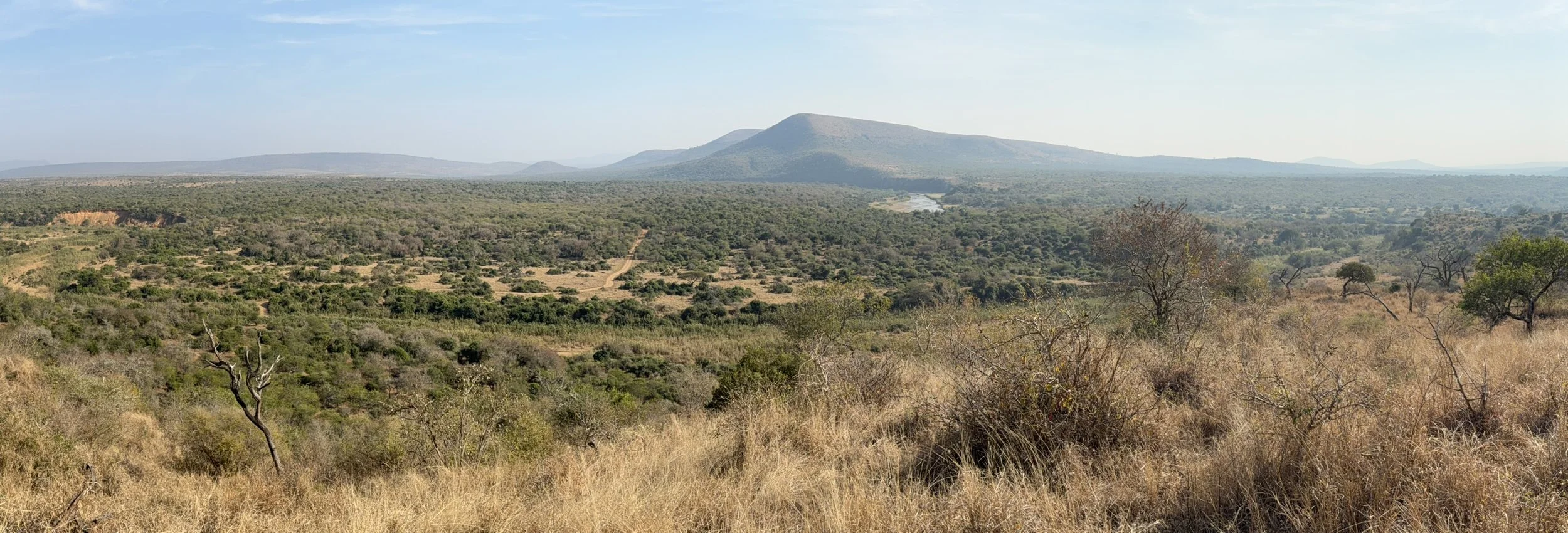
There's a part of Zululand that has never let go of me. Long before Ritson Safaris existed — before I'd stayed in a single luxury lodge or learned to tell one reserve's terrain from another's — Claire and I spent our very first bush holiday at Hluhluwe-iMfolozi, tucked into a chalet at Hilltop Camp with nothing but a pair of binoculars, camera and no idea what we were doing. It's where this whole journey started, and in a few weeks I'll be heading back into that same wilderness that captured my emotions back in 2009.
Hluhluwe-iMfolozi isn't just old — it's the oldest proclaimed nature reserve in Africa, protected since 1895, when the southern white rhino had been hunted to the edge of extinction and a handful of conservationists fought to give the last of them a fenced-off chance. That gamble worked. Warden Ian Player's Operation Rhino, run out of this same park in the 1950s and 60s, is the reason white rhino exist anywhere in numbers today. In fact his original ranger station is now located in the heart of Mthembu Lodge where the four small rondavels can be found.
Mthembu Lodge sits inside mFulaWozi, and mFulaWozi's own story is one of the better ones I've come across in this industry. It began in 2010 with a conversation between a developer, Barry Theunissen, and iNkosi Mthembu — a Zulu chief already running a lodge that benefited ten surrounding communities. Other traditional leaders joined the vision: iNkosi Biyela, iNkosi Mthetwa (then 86 years old), iNkosi Zulu and iNkosi Malaba, each agreeing to unlock land their communities held for exactly this purpose. Between them, they released 16,000 hectares of untouched bushveld, of which 6,000 hectares were folded directly into Hluhluwe-iMfolozi, dropping the fences and letting wildlife move freely between the two. It's a community concession in the fullest sense — the surrounding chiefs remain part of it, and the upliftment it brings to those communities is built into the model, not bolted on afterward.
Put the numbers together and the scale becomes hard to ignore: Hluhluwe-iMfolozi alone covers 960 km² — roughly 96,000 hectares — and with mFulaWozi's contribution the combined, unfenced wilderness now runs to over 100,000 hectares of protected Zululand. It's vast in a way that's easy to state and much harder to actually take in until you're standing on the edge looking into this overwhelming huge landscape.
This bush is distinct from anywhere else I visit, and every time I come back it feels less like a work trip and more like visiting an old friend. From the photos I've seen, Mthembu Lodge might be the most striking property I've been to in this park — built low, just above ground level, with sweeping views down over the White iMfolozi River, and raised wooden walkways threading between the lodge and each of the individual units. I've been told the units themselves were hand-built by members of the Mthembu community, stone by stone, which is exactly the kind of detail that makes a lodge feel like it belongs to its landscape rather than sitting on top of it.
I'll be back out looking for the Big Five, obviously — that never gets old in this part of the world — but I've also heard consistently excellent reports about the birdlife along this stretch of the White iMfolozi. I'm looking forward to spending some time with my wife and kids experiencing this trip from a family perspective & I'll be sharing the trip as it happens on my various social platforms, so keep an eye out for that.
